
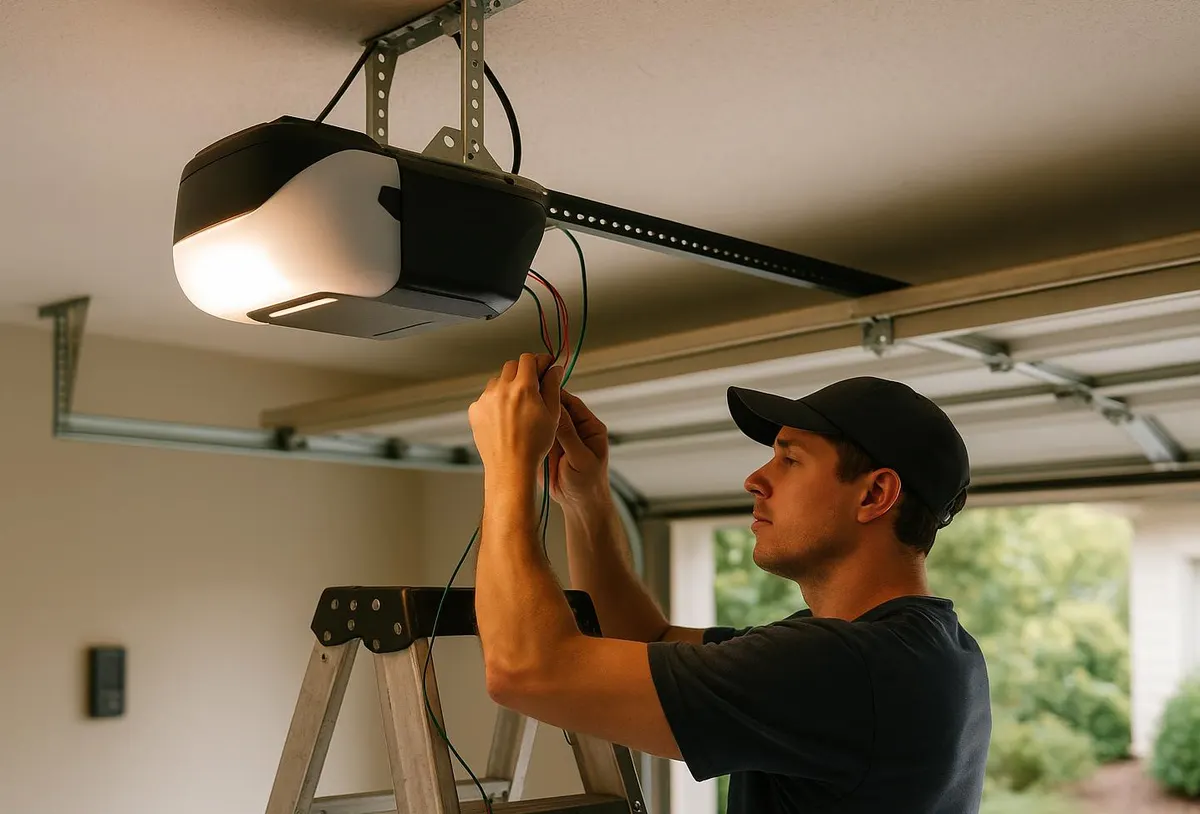
Rule of thumb: only pull the emergency release cord when the garage door is fully closed and resting on the floor. The exceptions are rare — mainly when you're stuck outside during a power outage and the door is already down, or when a technician instructs you to disconnect the opener for a repair. Outside of those situations, pulling that red cord can turn a simple inconvenience into a door crashing down on a car, a pet, or a person.
What the Cord Is Actually For
The emergency release disconnects the garage door from the opener's trolley, letting you move the door by hand instead of by motor. It exists for one reason: so you're never trapped by a dead opener. If the power goes out, the circuit board fails, or the motor burns up, you can still get the door open or closed manually.
Most openers have the cord hanging from a mechanism on the rail inside the garage. Pull it, and the door separates from the belt or chain drive. Pull the cord again (or use the lever the correct way) and reconnect it to the trolley once power or function is restored.
What Goes Wrong When It's Pulled at the Wrong Moment
A standard residential garage door weighs somewhere between 100 and 400 pounds depending on material and size. Torsion and extension springs carry that weight, not your arms. The opener's job is just to guide the door up and down — it isn't strong enough to lift the door on its own, and neither are you.
Here's where it gets dangerous:
- Pulling the cord while the door is open. With nothing holding it up, the door can free-fall. A door coming down unsupported can cause real injury and will usually damage the tracks, panels, or whatever is underneath it.
- Pulling the cord with a broken spring. If a spring has already snapped, the door has lost its counterbalance even while closed. Disconnecting the opener removes the last thing keeping it from slamming down if someone tries to lift it manually without understanding the spring is gone.
- Reconnecting incorrectly. If the trolley doesn't latch back into the opener carriage properly, the door can appear connected but isn't, so the next time someone hits the wall button, the door doesn't move the way they expect — sometimes with sudden, uneven motion.
None of this means the cord is unsafe to use. It means it's unsafe to use carelessly, especially when you can't see what condition the springs and cables are in.
When Pulling the Cord Is the Right Call
There are legitimate reasons to use it:
- Power outage with the door already closed. You need to get the car out and the opener has no power. Pull the cord, lift the door manually (it should feel balanced, not heavy), and prop it open if needed.
- Opener malfunction. The motor is running but the door won't move, or it's grinding and you want to stop it before something breaks further. Disconnecting lets you close the door by hand while you wait for a technician.
- During a repair. A technician may ask you to disconnect the opener temporarily while they work on the opener itself, separate from spring work.
In every one of these cases, the door should be down or you should be fully prepared to support its weight by hand before you pull the cord.
Storm Season Makes This More Relevant, Not Less
Walker County sees its share of hurricane-season storms moving through from the Gulf, and power outages that come with heavy wind and rain are common enough that most homeowners here have dealt with one. That's exactly the scenario where people reach for the emergency release — usually in the dark, in a hurry, without checking the door's position first.
Humidity is the other local factor worth knowing. Wood and composite doors can swell slightly in heavy moisture, and metal tracks can develop rust if they're not maintained, which makes manual operation stiffer and less predictable than it should be. A door that's hard to lift by hand after disconnecting the opener is telling you something — either the spring tension is off, the track is binding, or rust has built up on the rollers. That's not a door you want to force.
How to Use It Safely
- Confirm the door is fully closed before pulling the cord, unless you're doing so under a technician's direction.
- Pull the cord straight down, not at an angle, to avoid damaging the mechanism.
- Test the door by lifting it a foot or two by hand. It should move smoothly and stay in place when you let go. If it feels heavy, drops on its own, or won't stay up, stop — that's a spring or balance problem, not something to push through.
- Reconnect by pulling the cord again or following your opener's manual, then run the door through a full cycle with the opener to confirm it's seated correctly.
When to Call Jasper Garage Door Pro
If your door feels unbalanced, drops when you test it by hand, or the opener keeps failing in a way that has you using the emergency release more than once in a while, it's time to get it looked at rather than keep working around it. We handle spring replacement when the counterbalance is gone, and garage door opener repair and installation when the motor or electronics are the real problem — not just the symptom you're seeing at the cord.
If you're in Jasper, Sumiton, Carbon Hill, Cordova, Oakman, Dora, Parrish, or Nauvoo and your garage door isn't behaving the way it should, call Jasper Garage Door Pro. We'll find out whether it's the spring, the opener, or the track, and get it fixed right the first time.